Designing Creator Ecosystems
01. Overview
This case study showcases a concept developed for the Orange Challenge. Rather than designing a traditional marketing campaign, I explored a product-led ecosystem that empowers creators while helping Orange engage Gen Z audiences at scale.
02. Role
Beyond Design

03. Key Challenges
Authenticity Over Polish
Challenge
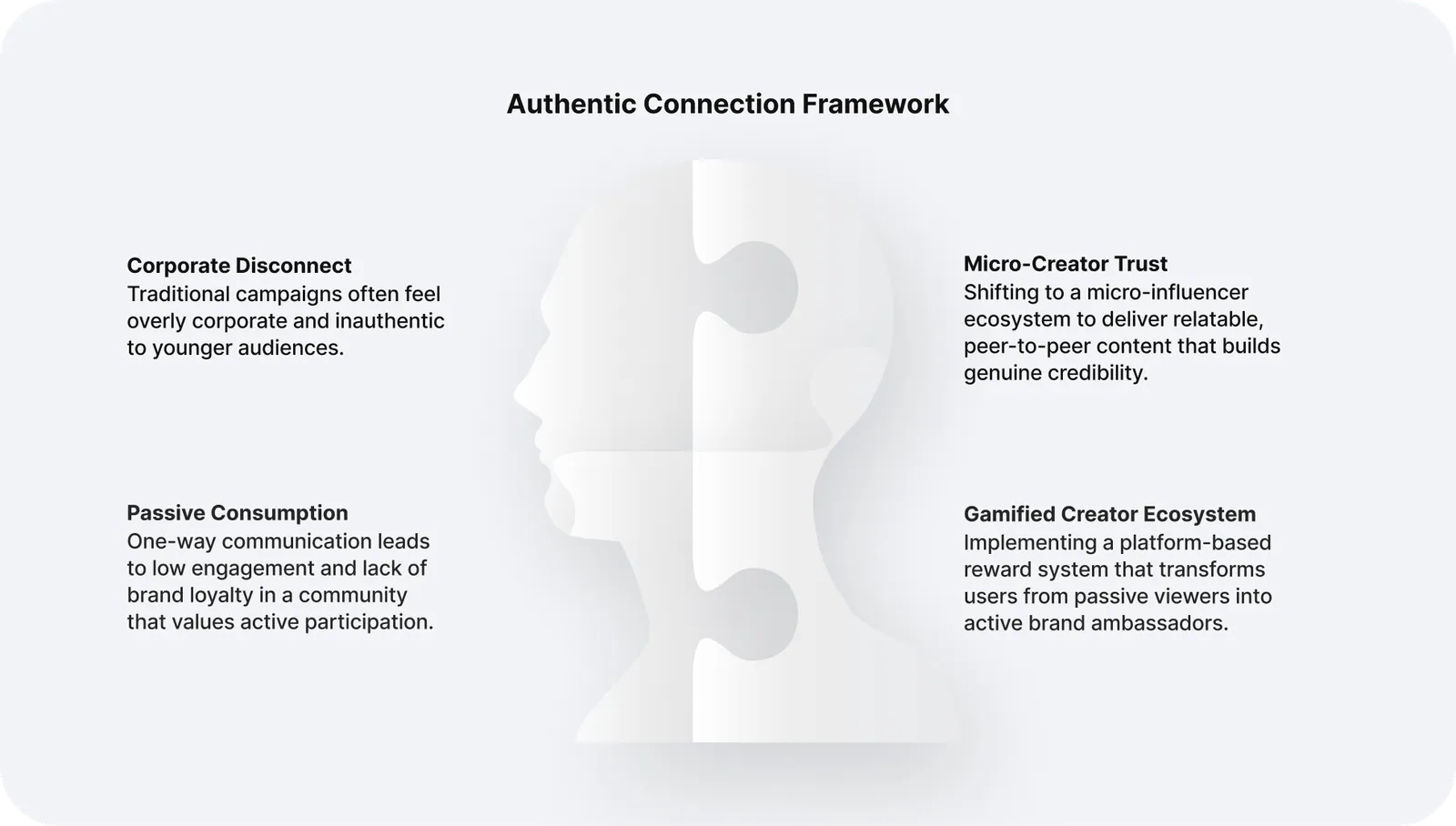
Most brands relies on traditional advertising formats, large influencers, and highly polished campaigns. Through research, I identified that Gen Z audiences increasingly value authenticity, relatability, and community-driven content over corporate communication.
Solution
Instead of designing a conventional marketing campaign, I proposed a platform-based ambassador ecosystem focused on micro creators and UGC content.
Order From Chaos
Challenge
Managing hundreds of creators at scale Working with micro creators creates authenticity, but it also introduces operational complexity. Unlike traditional influencer campaigns involving only a few large creators, this ecosystem could involve hundreds or thousands of participants simultaneously.
Solution
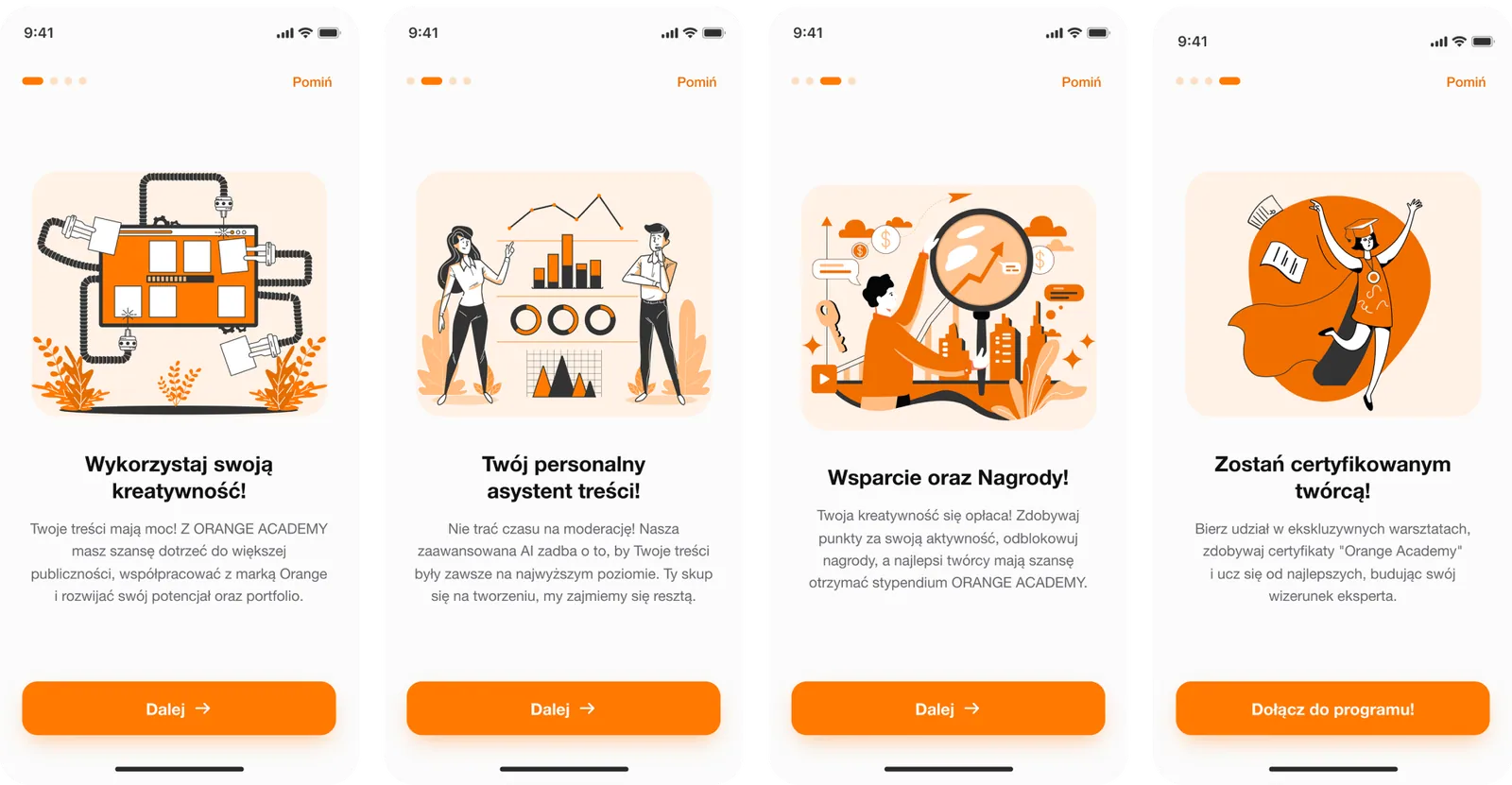
I designed a centralized platform that allowed Orange to manage the entire ambassador ecosystem in one place. This created a scalable operational structure capable of supporting a large creator community while maintaining organization and engagement.
The platform included
Task management for creators
Centralized campaign tasks and deadlines.
Campaign and product assignment systems
Matched creators with relevant campaigns.
Creator progress tracking
Tracked engagement and creator performance.
Gamification and leaderboard mechanics
Boosted motivation through competition.
AI-powered content supervision
Automated guideline checks and content feedback.
Cross-collaboration system
Encouraged creators to build relationships and collaborate on shared campaigns.
04. Process & Thinking
Augmenting Human Insight
Challenges
Campaign Guideline Compliance
A creator-driven ecosystem also introduced moderation and quality-control challenges. With hundreds of creators publishing content regularly, manual review would require significant time and resources.
How can creators receive support while producing content? Many smaller creators lack strategic guidance, feedback, and production support during campaigns.
Work under pressure
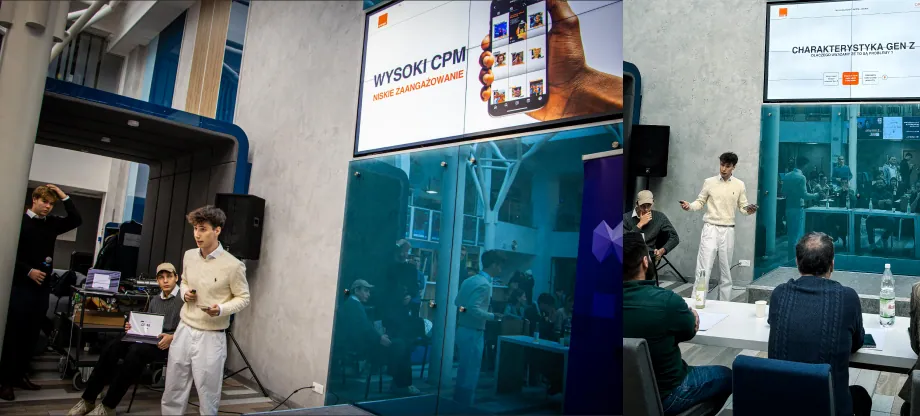
The 48h Pressure Test . This concept was created during a high-intensity competition organized by Econverse in collaboration with Orange, where teams had limited time to solve real business and marketing challenges.
Solution
Architecting Cooperative Intelligence.
This concept wasn't born in a quiet office—it was forged during a high-intensity 48-hour sprint. Under immense pressure, I had to find a way to maintain active cooperation with stakeholders while managing hundreds of independent creators. I realized that traditional oversight would fail at this scale, so I pushed the boundaries of what's possible by designing a system where technology doesn't replace humans—it empowers them.
Key Features
Interoperable AI Moderation: Automated guideline verification to ensure brand safety at scale, facilitating seamless interoperability between creator output and stakeholder requirements.
Strategic Creator Co-Pilot: An AI-driven support layer providing instant feedback and production guidance.
Strategic Creator Co-Pilot: An AI-driven support layer providing instant feedback and production guidance.
05. Design Discovery
The Art of Reduction
Opportunity
In this sprint, we honed in on the essentials. By focusing on the MVP, we ensured core needs were met and brought all stakeholders into alignment.
Key Deliverables
Opportunity Assessment: Business case definition, Market and user analysis
Strategic Direction: User hypotheses, MVP definition and prioritization
Experience Prototype: User journey design, High-fidelity Figma prototype
Key Insights
Gen Z Values Authenticity
Micro-influencers generate 60% higher engagement than celebrity influencers, making them more effective for authentic community-based marketing.
Creator Economy Is Growing
57% of Gen Z wants to become influencers or content creators, showing a major shift toward creator-driven digital culture.
Large Influencer Campaigns Carry Risk
Relying on a few large influencers creates reputational and operational risks for brands when controversies occur.
Hypotheses
Desire For Recognition
Young creators are more likely to engage with brands that provide visibility, status, and social validation.
Social Identity Expression
Gen Z uses content creation as a way to express identity, personality, and belonging within digital communities.
Fear Of Missing Opportunity
Exclusive programs, leaderboards, and rewards increase engagement by triggering aspiration and social comparison behaviors.
Community-Driven Motivation
Creators are more emotionally invested when platforms enable relationships, collaboration, and shared progression.
Peer Trust Over Authority
Users perceive recommendations from relatable creators as more authentic and trustworthy than traditional advertising.
UX Strategy
Leverage Social Validation & Recognition Gen Z creators are highly motivated by visibility, recognition, and social status within digital communities. The platform was designed to reinforce these psychological drivers through public progression systems, rewards, leaderboard mechanics, and opportunities for recognition inside the creator ecosystem.
Encourage Authentic Community-Driven Content Instead of forcing scripted advertising, the experience focused on enabling creators to naturally integrate products into their own communication style. By prioritizing relatable micro creators, collaboration features, and community interactions, the platform aimed to create more trustworthy and emotionally engaging brand communication.
Concept Overview
Building Orange Academy
At a Glance
Orange Academy was designed as a creator ecosystem rather than a traditional marketing campaign. Instead of relying on a small number of influencers, the platform empowers micro creators through structured campaigns AI-assisted content creation, and community-driven engagement.
The goal was to create a scalable system that benefits both creators and the brand. Creators gain visibility, rewards, and growth opportunities, while Orange receives authentic user-generated content from trusted community voices.
Creator Dashboard
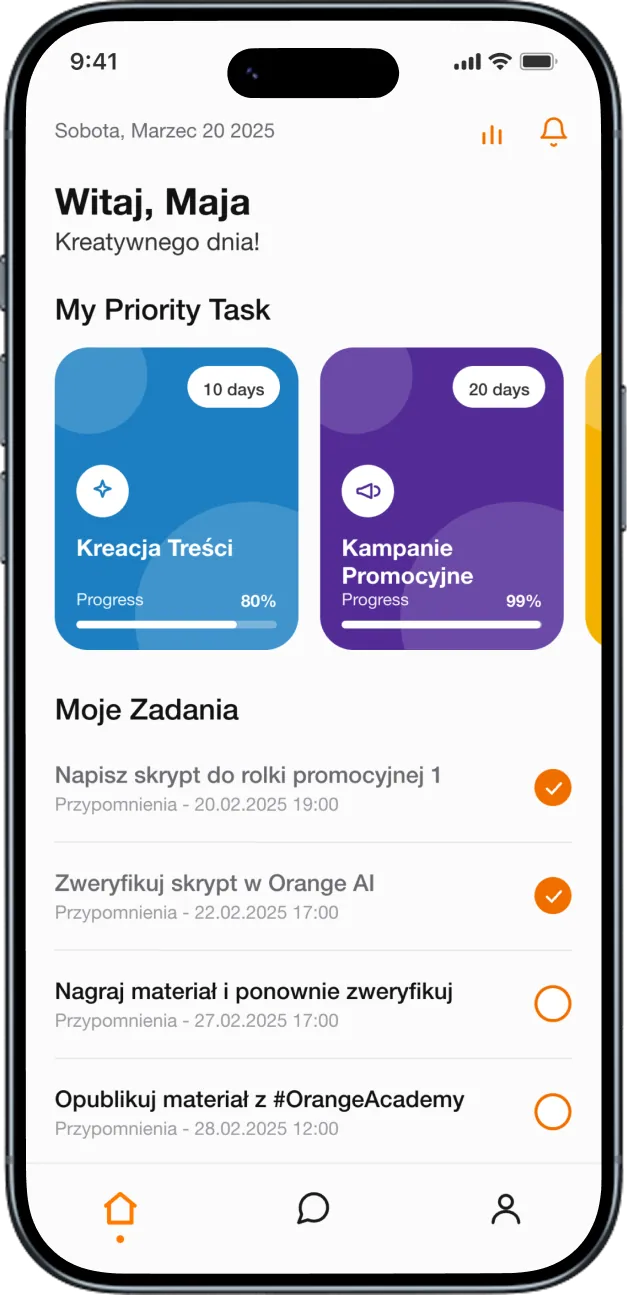
I designed the dashboard as a centralized workspace for creators. By prioritizing active campaigns, tasks, and deadlines, the experience helps users stay organized and focused throughout the content creation process.
Design Decisions
Establish Visual Hierarchy: The dashboard presents active campaigns through large, color-coded cards with clear progress indicators. I used size, contrast, and hierarchy to direct attention toward the creator's important tasks.
Visualize Progress Clearly: Ambassador programs can feel overwhelming when progress is unclear. I used visual progress indicators, deadlines, and completion states to create a stronger sense of momentum and achievement.
UX Psychology Applied
Goal Gradient Effect Users become more motivated as they perceive themselves getting closer to task completion and rewards.
Zeigarnik Effect Visible incomplete tasks create cognitive tension, encouraging creators to return and finish outstanding activities.
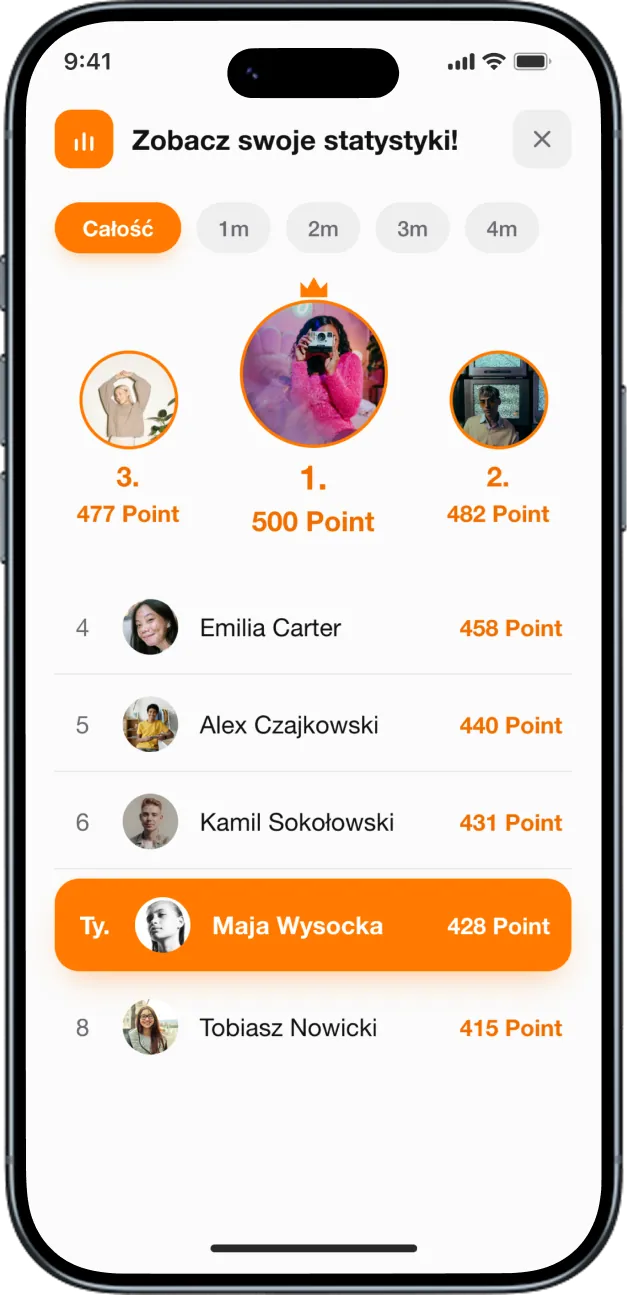
Community Leaderboard
I designed the leaderboard around recognition and progression, giving creators clear goals, visible achievements, and motivation to remain active within the ecosystem.
Design Decisions
Make Achievement Visible: I emphasized top-performing creators through larger profile imagery, visual prominence, and ranking hierarchy. This creates goals while celebrating success.
Highlight Personal Progress: Instead of focusing solely on top performers, I visually distinguished the user's own position in the ranking.
UX Psychology Applied
Social Comparison Theory: People naturally evaluate their progress relative to others, increasing motivation and engagement.
Social Proof: Visible creator achievements signal success and encourage others to participate more actively.
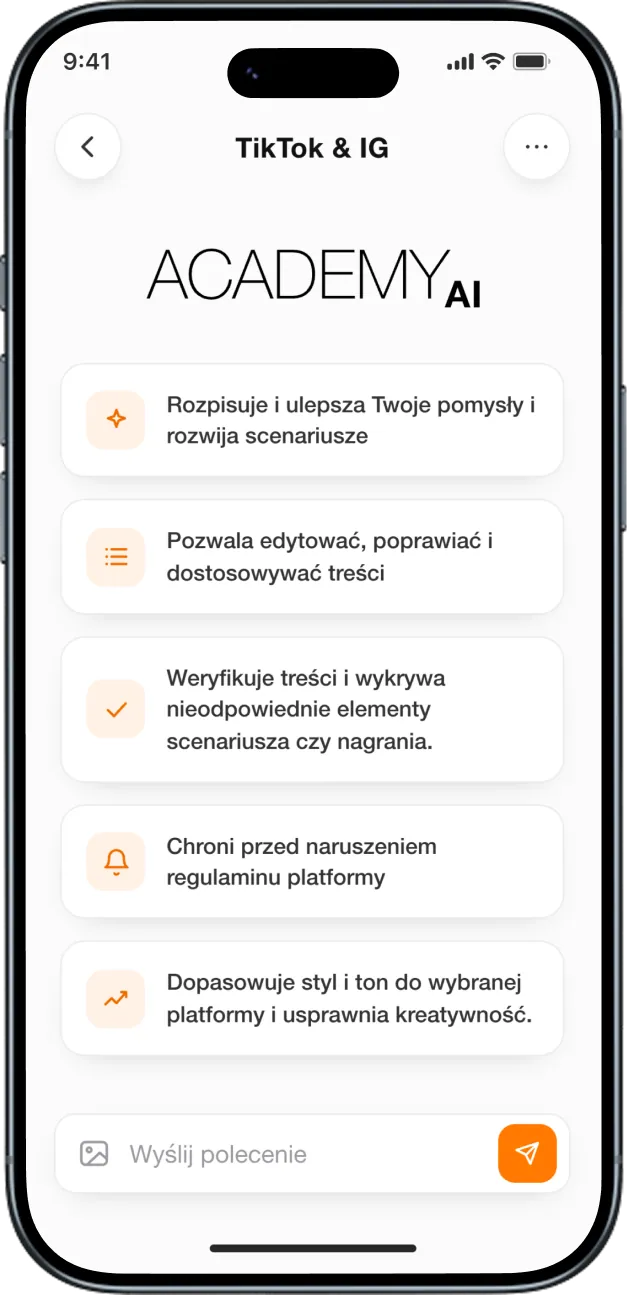
Academy AI
Academy AI acts as a creative co-pilot throughout the workflow. By providing real-time guidance, content verification, and platform-specific recommendations, it helps creators produce higher-quality content with greater confidence.
UX Psychology Applied
Cognitive Load Reduction: AI assistance simplifies decision-making by breaking complex creative tasks into manageable actions.
Scaffolding Theory: Creators receive support when needed, helping them build confidence and improve content quality over time.
Platform Value Creation
Beyond solving the challenge itself, the concept revealed multiple opportunities to create long-term value.
Creator Talent Pipeline
The platform allows Orange to identify high-potential creators early in their journey. Rather than relying solely on established influencers, the brand can build long-term relationships with emerging talent and grow alongside them.
Scalable Content Production
By activating hundreds of micro creators simultaneously, Orange gains access to a continuous stream of authentic content across multiple audiences, regions, and niches without depending on a small group of influencers.
Stronger Brand Affinity
The program transforms creators from passive customers into active brand advocates. Through participation, rewards, and recognition, Orange builds deeper emotional connections with Gen Z communities.
06. Closing
Final Reflections
Developed for the Econverse × Orange Challenge, this concept tackled a Gen Z engagement challenge set by Orange. The project reached the final round and was recognized for its innovative creator ecosystem and AI-assisted approach.
Winning Moments
Innovative Ecosystem Thinking: The jury appreciated the shift from a traditional campaign to a creator-driven ecosystem powered by AI and community engagement.
Research-Driven Decisions: Market research, psychology, and creator economy trends helped validate both user and business needs.
Product-Led Approach: I approached the challenge as a scalable product ecosystem rather than a standalone marketing campaign.
Lessons Learned
Innovation Requires Simplicity: The most effective ideas are often those that remain easy to understand and implement.
Technology Enables Scale: AI can significantly reduce operational complexity while supporting both creators and moderators.
Stakeholder Alignment Matters: A strong concept is only valuable if its vision can be clearly communicated and understood.
Trust Me, It Makes Sense